

13/03/2026 05:31 pm MYT
The annual session of the National People's Congress (NPC) and the Chinese People's Political Consultative Conference are a major event in China's political calendar. The so-called Two Sessions provide key insights into the Chinese government's priorities for the coming year, and outline the country's overall policy direction. This year, the 4th session of the 14th NPC started on 5 Mar and ended on 12 Mar. Usually, the main task of the NPC meeting is to review and confirm the Government Work Report (GWR).
The GWR is the most important policy document of the year as it sets out the government's economic agenda as well as a vast range of tasks the government will pursue in the coming months. The 2026 GWR consists of 4 parts, adhering to the theme of promoting high-quality development, with particular emphasis on delivering a good start to the 15th Five-Year Plan (15P), strengthening innovation, enhancing people's livelihoods, and being practical. Acknowledging the growing uncertainties brought about by heightened geopolitical tensions, the 2026 GWR gave significant attention to boosting self-sufficiency of the country and further promoting domestic demand, in particular private consumption. As the growth strategies of the government largely remain the same as last year, there is no change in key government targets in 2026, with the exception of the GDP growth target and the reduction in energy consumption per unit of GDP (table 1).
Note from Publisher
The US-Israel-Iran war has caused oil and natural prices to surge. As the war drags on, fears of a prolonged supply shock that could ripple across the global economy have intensified. For Malaysia, the situation presents a mixed picture. While Malaysia is a net oil importer, this is more than offset by her position as a big net natural gas exporter, making the country a net energy exporter. The country benefits from higher natural gas prices, which can boost government revenues and improve the trade balance.
Nevertheless, higher global energy prices inevitably transmit through the economy, feeding into broader inflation. The second minister of finance has said that the Malaysian government is able to maintain the RON95 petrol price at RM1.99 per litre for at least two months. However, if the war persists and energy prices remain elevated, Malaysia will eventually face fiscal and economic pressures. Malaysians should therefore manage their financial conditions carefully and brace for possible price increases in the months ahead.
i Capital will pause its publication for one issue in the week starting 16 Mar. Our Kuala Lumpur office will be closed from 21 Mar to 23 Mar, during which www.icapital.biz will not be updated. Normal operating hours will resume on 24 Mar. The next issue, Volume 37, number 30 of i Capital, will be dated 26 Mar - 1 Apr 2026.
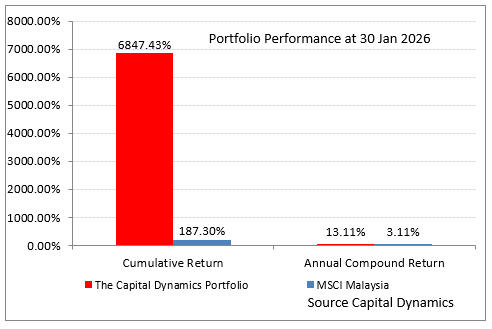
PORTFOLIOS









In The Media

STOCK SELECTIONS
KLSE | 4 hours, 40 minutes ago
Xetra | 4 days, 16 hours ago
KLSE | 1 week ago
HKEX | 1 week, 4 days ago
KLSE | 2 weeks ago
Corporate News
Proposed acquisition
Proposed share issuance
4Q results
2Q results
Voluntary winding-up