
26/06/2026 06:37 pm MYT
The rise of the US as the world's leading technological superpower is deeply intertwined with its long-standing ability to attract, absorb, and retain exceptional talent from across the globe. For more than a century, the US has functioned as a global magnet for scientists, engineers, mathematicians, entrepreneurs, and innovators. Many of the country's most important technological breakthroughs were either pioneered or heavily shaped by foreign-born individuals. From the scientists who contributed to the Manhattan Project during the Second World War to the engineers and entrepreneurs who built Silicon Valley, immigrant talent has repeatedly strengthened America's innovative capacity.
The American university system has played a particularly important role in this process. Elite institutions such as the Massachusetts Institute of Technology, Stanford University, and University of California, Berkeley have attracted some of the brightest students and researchers globally. Many of these individuals remained in the country after graduation, contributing to research laboratories, startups, and major technology firms. This created a powerful cycle in which global talent reinforced American innovation, which in turn attracted even more talent.
Note from Publisher
According to the Department of Statistics Malaysia, Malaysian households discard between 31.9 kg and 97.3 kg of food per person annually, with the majority of waste coming not from scarcity but from daily behaviour and management practices. Processed and cooked food is more frequently discarded than raw ingredients, with rice, vegetables, and takeaway meals forming a large share of what ends up in the bin. This points to inefficiencies in meal planning, over-preparation, and the common habit of storing food beyond their usable life.
In addition, nearly 80% of Malaysian households did not practise separate disposal, throwing away food waste together with other household trash, limiting recycling or composting potential and adding pressure to already strained landfills.
Although the estimated range of Malaysia’s household food waste per capita is broadly in line with the global average of 79 kg, it should not be taken lightly. Food waste has implications on food security, resource efficiency, societal well-being, and environmental sustainability. We need to have serious public awareness campaigns about meal planning, purchasing planning, and proper disposals. Malaysians should not take having abundant food for granted.
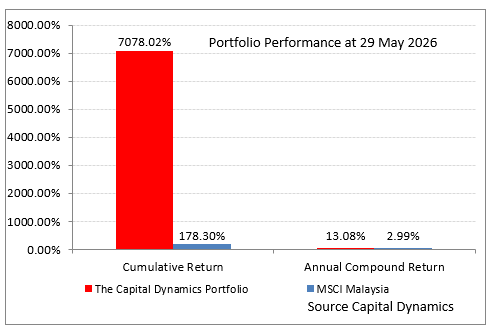
PORTFOLIOS









In The Media



STOCK SELECTIONS
SZSE | 1 week, 2 days ago
KLSE | 1 week, 4 days ago
SZSE | 2 weeks, 2 days ago
KLSE | 2 weeks, 4 days ago
SSE | 3 weeks, 2 days ago
UNIVERSAL SCIENTIFIC INDUSTRIAL (SHANGHAI) CO LTD (USI, 601231)
Corporate News
2Q Results
Successful joint tender
Wins hospital LLM deals
Strategic partnership
Wet lease agreement