

26/01/2026 08:08 am MYT

This week, i Capital features on Shanghai Biren Technology Co., Ltd (Biren), one of the leading fabless semiconductor companies specialising in the development of GPGPUs (general purpose graphic processing units) and GPGPU-based intelligent computing solutions in mainland China. Its product portfolio includes a hardware system and a software platform. The former includes Peripheral Component Interconnect express (PCIe) cards and Open Accelerate Modules (OAMs) containing the Company's self-developed GPGPU chips. Its self-developed software platform BIRENSUPA bridges the hardware systems with AI application scenarios, optimises hardware performance, and manages large-scale GPGPU clusters. BIRENSUPA was made compatible with third-party GPGPU computing software platforms, such as NVIDIA's CUDA, to minimise to the cost of migrating to Biren's products.
The Company was founded in 2019 by Dr. ZHANG Wen, who worked as the president of SenseTime (0020 HK) before founding Biren. Chief Technology Officer, Mr. HONG Zhuo, worked as the engineering director of S3, Inc and as a principal architect at NVIDIA in the US. Biren was listed on the Stock Exchange of Hong Kong in Dec 2025 at an offering price of HK$19.60/share. As of the end of Jun 2025, the Company has 792 full time employees, of which 657 were in the R&D department.
Note from Publisher
i Capital has written many times about economic growth versus economic development and said that Malaysia does not need headline-grabbing GDP growth rate but solid and sustained quality growth and economic development. Malaysia needs to learn from China in this respect. China started paying attention to quality growth even when the country’s GDP per capita was way below that of Malaysia.
China used to import more than half of the world’s plastic waste before it introduced its National Sword policy in 2018 which significantly restricted the import of certain types of solid waste, particularly plastics. After China’s import ban, developed countries began to look for alternative countries to dump their plastic waste. Unfortunately, Malaysia became one of the replacement countries and became the world’s largest importer of plastic waste in 2023, according to an OECD report.
Last year, the Malaysian government implemented stricter rule to significantly tighten conditions for the imports of plastic scrap. This is a long-overdue action given that the 2025 Mismanaged Waste Index had placed Malaysia in a high-risk category, with about 26.4% of its plastic waste poorly managed. In fact, Malaysia should totally ban the imports of plastic waste and other solid waste.
PORTFOLIOS
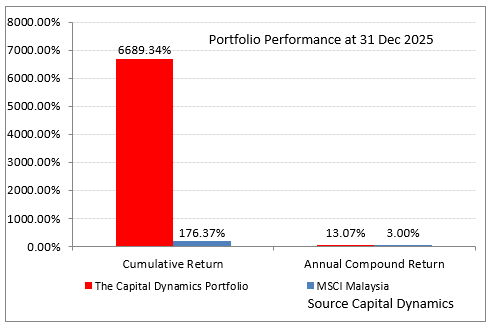









In The Media

STOCK SELECTIONS
HKEX | 16 hours, 42 minutes ago
KLSE | 3 days, 4 hours ago
SZSE | 1 week ago
KLSE | 1 week, 3 days ago
NASDAQ Stockholm | 2 weeks ago
Corporate News
Material litigation update
3Q results
4Q results
2Q results
Completion of disposal